Author: Erik Nilson / Last Updated: January 18, 2025
Written by bike industry experts with over 20 years of mountain biking experience, our mountain bike shoe buying guide covers everything you need to know before making a purchase. Read on to learn how to choose the right mountain bike shoes for XC, trail, enduro, and downhill riding and racing.
Jump to…
- Types of Mountain Bike Shoes
- Closure Types
- Clipless vs Flat Pedal Mountain Bike Shoes
- Fit and Sizing
- Cleat Position and Compatibility
- Outsole Grip and Traction
- Sole Stiffness and Power Transfer
- Toe and Heal Protection
- Breathability and Ventilation
- Weight and Bulkiness
- Waterproofing and Weather Resistance
- Mountain Bike Shoe Insulation
- Maintenance and Care
- Warranty
- Popular Mountain Bike Shoe Brands
- Where to Buy Mountain Bike Shoes
Ready to make a purchase? See our expert guide to the year’s best mountain bike shoes.
When you buy through our links, we may earn a commission (at zero cost to you). Learn more.
Types of Mountain Bike Shoes
Mountain bike shoes come in a wide variety of styles with each designed for a particular type of riding. For the best experience on the bike, it’s important to match the types of trails you typically ride with the style of shoe you purchase.
XC (cross-country (XC): Best for Speed and Efficiency
Cross-country mountain bike shoes are specifically designed for optimal efficiency, and are characterized by their lightweight construction and sleek appearance. Shoes like Shimano’s XC7 prioritize maximum power transfer through a stiff sole, and are made out of carbon. Key features include a stiff sole (often made of carbon fiber) for maximum power transfer, low weight, and a minimalist build. Further, cross-country mountain bike shoes tend to be snug fitting and feature minimal protection around the toes and ankles.

If your primary focus is on racing and or cranking out the miles, this style is an ideal choice. Finally, cross-country mountain bike shoes are well-suited for gravel rides as well.
Trail: Best All Around Mountain Bike Shoe
Trail-style mountain bike shoes offer a nice blend of on-bike comfort, padding for downhill protection, and low weight for all day pedaling efficiency. Take Pearl Izumi’s X-Alp SPD for example. You get a stiff sole for excellent power transfer and a little bit of protection around the toes and ankle to help defend against trail debris, and they come in at a relatively low weight. For one style of shoe that can do it all pretty well, look to trail-oriented mountain bike shoes.

Enduro and Downhill: Best for Aggressive Riding
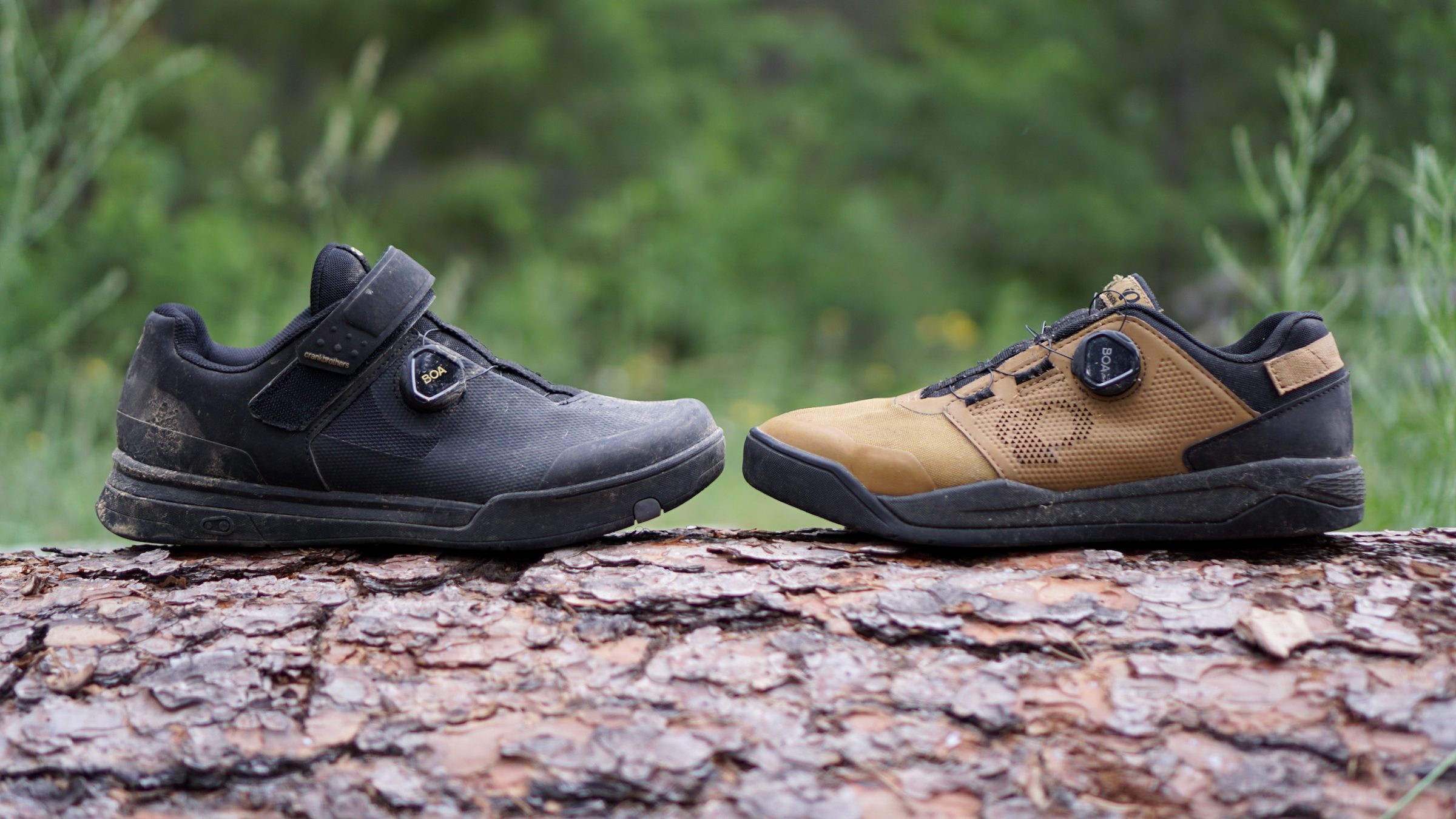
Aimed at the gravity crowd, downhill- and enduro-style shoes prioritize descending and protection above all else. These models typically have a thicker upper and additional protection around the toes and ankles to help ward off trail hazards and rock strikes. Their sticky rubber outsoles offer improved traction on flat pedals, and clipless shoes like the Crankbrothers Mallet BOA allow cleats to be positioned further back which helps improve body position while descending steep tracks. These features do come with a cost, however, and these models can weigh considerably more than their XC counterparts.

Closure Types
BOA Dials
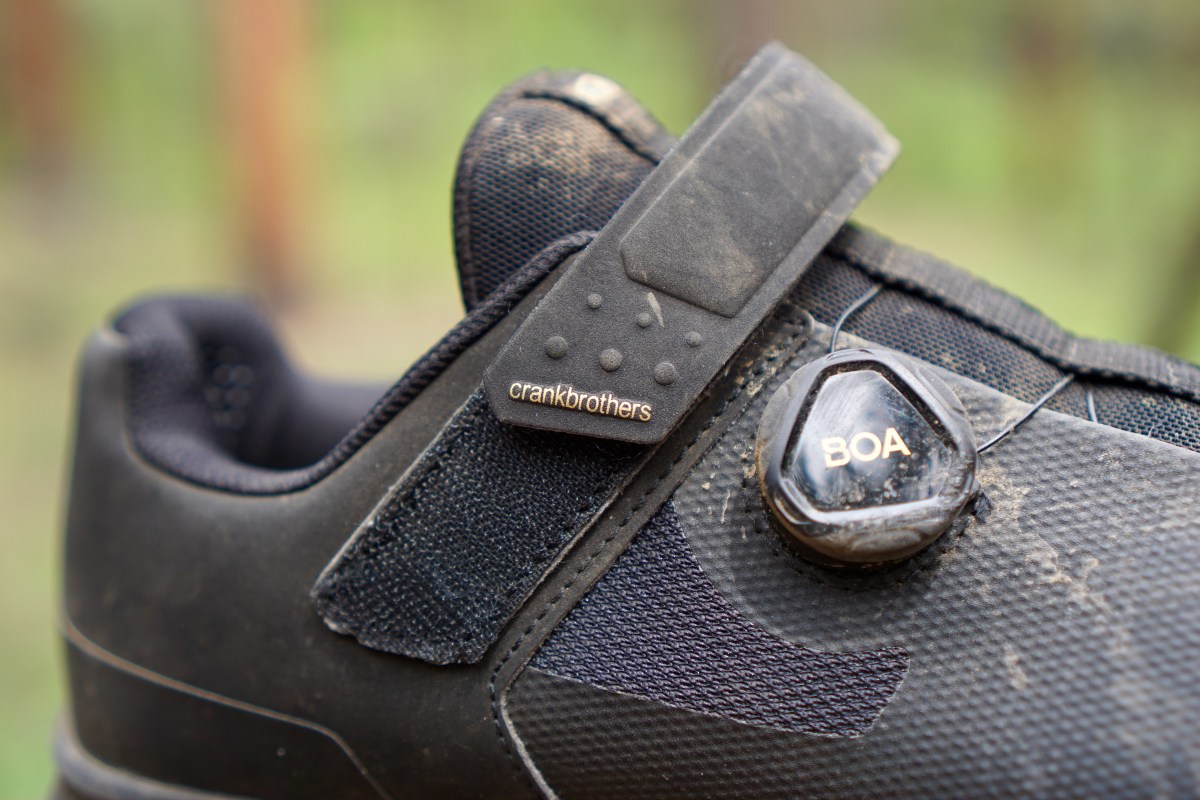
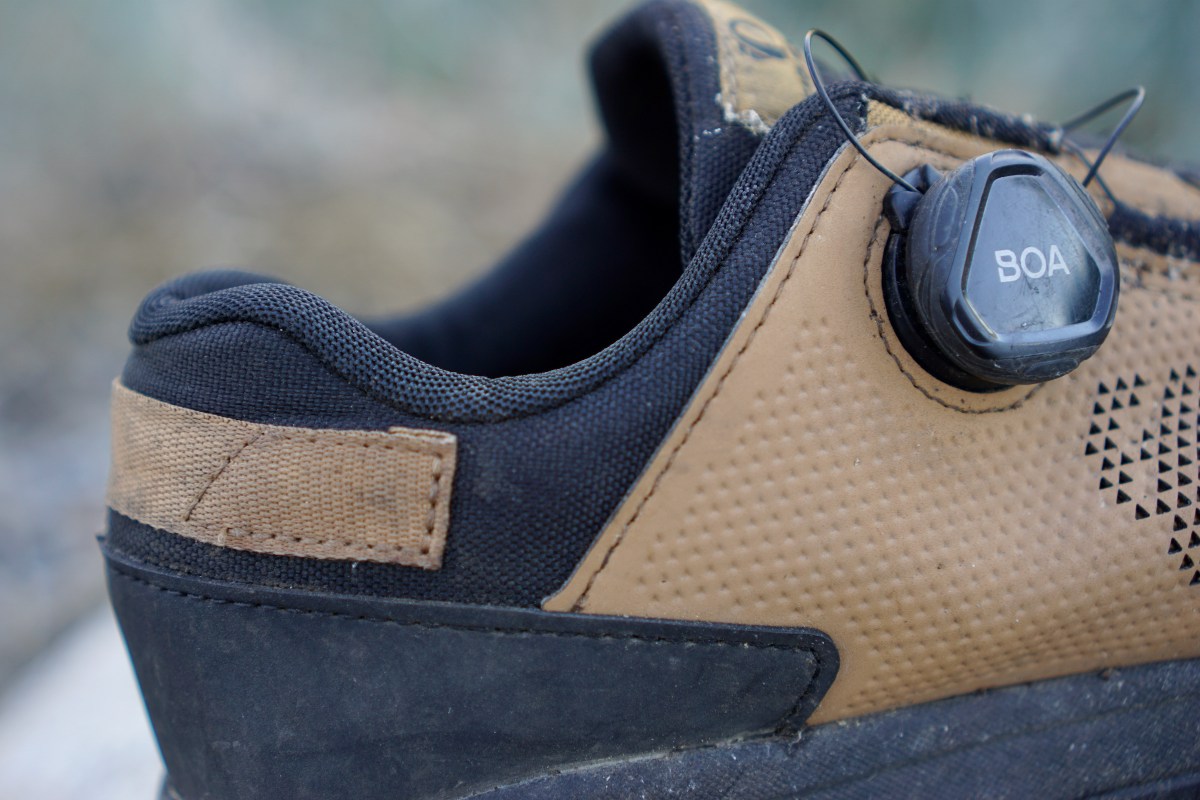
BOA closures use a dial-and-wire system to provide a secure and comfortable fit. They’re very convenient and easy to use on the fly, and they offer the ability to make very small micro adjustments, which is ideal for those who demand a perfect fit. BOA dials are also easy to replace should they come in contact with a rock or tree (although we’ve never had one break). That said, BOA dials typically cost more than other closure systems and are reserved for more expensive mountain bike shoe models. We love the adjustability and customized fit of dual BOA closures, like those found on the Shimano XC7 mountain bike shoes.

Hook-and-Loop Velcro Strap
Easy and convenient, hook-and-loop Velcro straps are a popular choice for many mountain bike shoes. Models like the Giro Ranger use three straps and can be quickly adjusted on the go, making them a favorable option compared to laces. We especially appreciate when shoes incorporate a Velcro strap at the top to hold the heel down, which helps transfer power to the pedals. One drawback to Velcro straps, however, is that they can sometimes wear out over many seasons of use. And since they’re usually sewn into the shoe, replacing them can be nearly impossible. Nevertheless, over the course of thousands of miles with various shoes, we’ve never encountered any issues.
Laces
Arguably the most popular type of closure system, laces are a convenient and easy way to cinch down your mountain bike shoes. They do an excellent job of providing a secure fit and offer almost infinite adjustability for your feet. That said, it’s impossible to adjust tension on the fly, and they can be challenging to retie with frozen fingers. Additionally, if you ride in wet and sloppy conditions, laces tend to hold onto mud and moisture much worse than BOA or quick-lace options. However, laces are typically less expensive to produce, which makes them a great match for budget shoppers. And their durable construction and low rate of failure make them an ideal choice for bikepacking trips, like those found on the Five Ten Trailcross LT.


Quick-Lace (speed lace)
A nice alternative to standard laces, quick-lace systems offer a solid upgrade to the traditional model. As the name suggests, they’re quick and easy to use. TO make adjustments, you simply pull up on the tab, and a cam locks them in place. Quick-laces provide added convenience for users and are easy to “tie” with gloves on. They also have the added benefit of not getting bogged down by water and mud. Some models, such as the Crankbrothers Speed Lace, combine both a quick-lace system with a Velcro strap to provide a customized and very secure fit.
Buckle Ratchet Strap
Similar to hook-and-loop straps, buckle straps are easy to adjust on the fly and offer a secure fit. They consist of an adjustable ratchet buckle and strap with teeth on it, which is made out of plastic. Besides their easy-to-use nature, we like buckle straps for wet weather use, as they don’t get affected by mud and water. One negative side of buckles, however, is that the adjustment of each tooth on the strap is usually quite large, and can sometimes lead to a shoe that feels either too tight or too loose. BOA closure systems, described above, have smaller increments and eliminate this issue.

Clipless vs Flat Pedal Mountain Bike Shoes
Flat Pedals
As the name suggests, flat pedals (sometimes called platform pedals) have a large flat area for a rider’s feet to rest on. The pedals have small pins for shoes to grip onto and are typically made of a composite plastic material or metal. Flat pedals offer a lot of freedom for foot placement, and adjustments are quick and easy. One of the main advantages of flat pedals–particularly for beginner riders–is the ability to dab your foot on the ground should you lose your balance or need to bail off your bike. That said, plenty of professional riders still use them because it suits their particular riding style. In general, expect to spend anywhere from $40 for basic models (like the Race Face Chester pedal) up to $200 for a top-of-the-line option.


Clipless Pedals
Despite the name, clipless pedals allow a rider to clip their shoes directly into the pedals, which provides a secure connection between the rider and bike. The main advantage of using clipless pedals is their ability to more efficiently transfer power from the rider to the bike than flats, which is why they’re the style of choice among professionals across most mountain biking disciplines. Clipless pedals do a great job of keeping your feet planted during both technical uphill and downhill sections of trail. And while some riders find clipless pedals intimidating to ride in–they’re afraid of not being able to unclip at a moment’s notice–quality models like Shimano’s PD-M8120 XT allow you to adjust how easy it is to get out.


Magnetic Pedals
One lesser-known option is the use of magnets to attach the shoe and pedal, striking a middle ground between clipless and flat pedals. This unique design offers a locked-in feel and efficient energy transfer like clipless options, while providing the foot placement freedom similar to flats. The main advantage of these pedals is the assistance they provide in keeping your foot in place on rough trails, without requiring the full commitment of clipping in. However, they do have some downsides. Magnetic mountain bike pedals tend to be heavier, and releasing from the pedal can feel a bit awkward.
Dual Platform / Hybrid Pedals
While not as popular to use on mountain bikes, dual platform pedals like Shimano’s PD-EH500 feature a flat pedal on one side and a clipless on the other. This style is great for recreational riders who use their mountain bikes around the neighborhood one day with tennis shoes, and then want to hit the trails the next day with clipless shoes. It’s not our preferred option in most cases, but it certainly fills a niche and is an excellent alternative for certain riders who find their needs switching between platform and clipless pedals on a daily or weekly basis.
Fit and Sizing
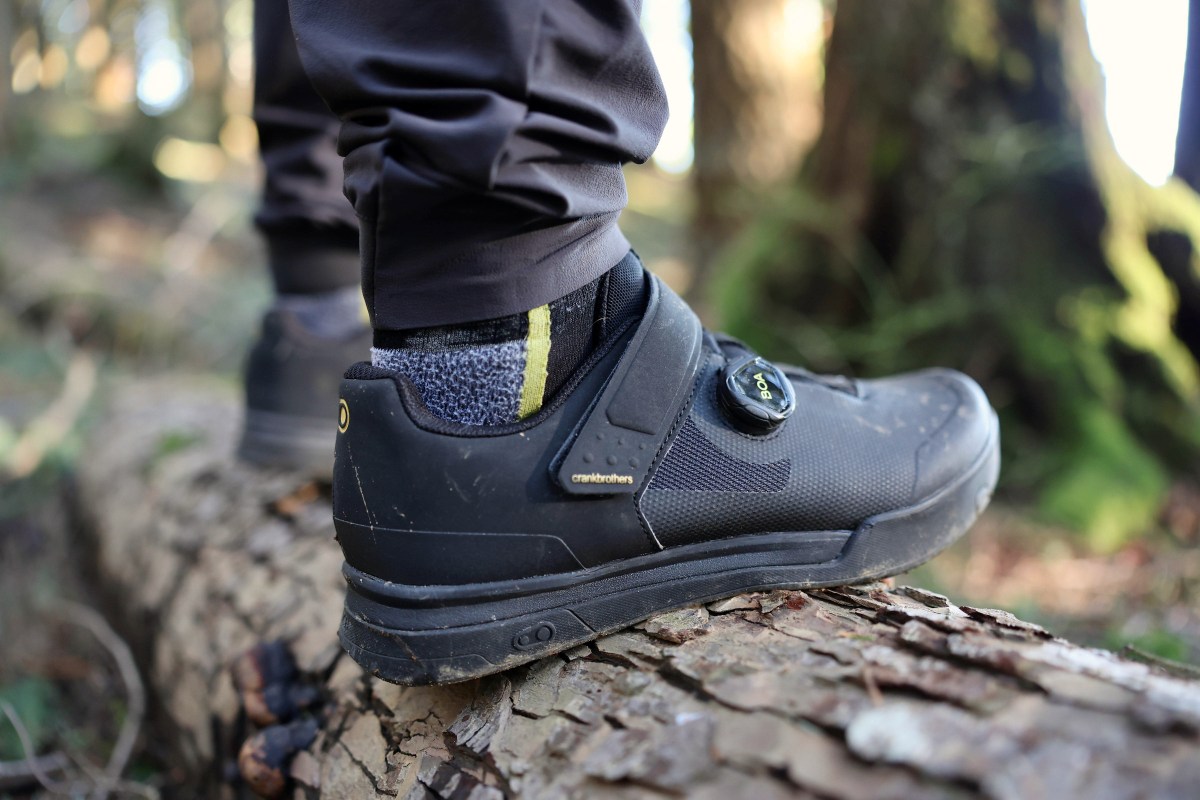
Finding the right fit is critical when choosing mountain bike shoes. To ensure the best performance and highest levels of comfort, measure your foot and then match it to a brand’s size chart. Additionally, consider any specific fit needs you might have to account for, like if you have wide or narrow feet. Keep in mind that different brands and models may have varying sizing standards, so it’s important to reference each brands size chart. In terms of fit, shoes should be snug and free of any pressure points. Additionally, it’s important to try them on with your go-to riding socks. For example, you may want to wear wool socks for winter riding.
Cleat Position and Compatibility
Cleat Position
Before being able to use your new clipless shoes, you’ll first need to attach mountain bike cleats to the bottom of the shoes. A good place to start for cleat placement is about 10mm behind the ball of the foot, which offers a nice balance of power transfer and stability. Cross-country riders, or those who prioritize laying down the watts quickly, may consider moving the cleats forward on the bottom of the shoe. However, if you’re a downhill or enduro rider that’s more interested in control on the pedals and descending prowess, plan on scooting the cleat back towards the rear of the cleat channel for added stability.
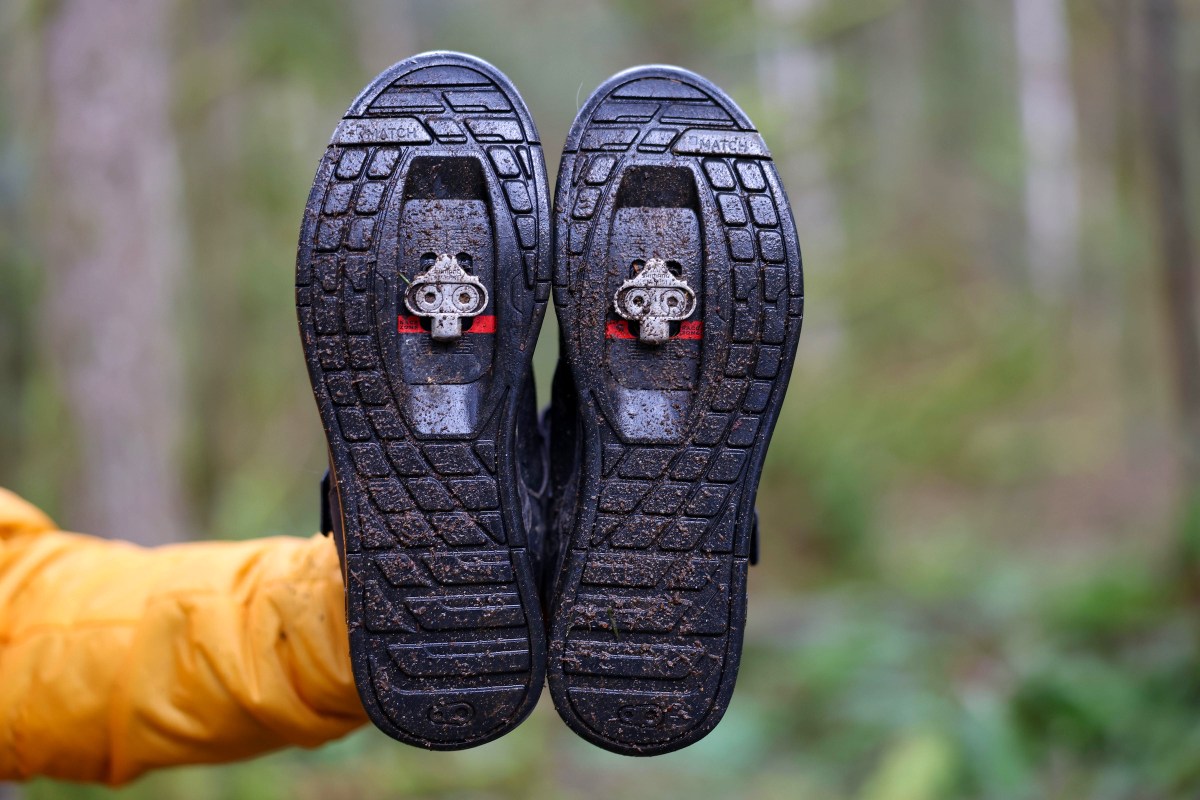
Besides fore and aft position, it’s worth considering the angle of the cleat as well. Do your toes point in as you walk? Then you should point the tip of the cleat towards your pinky toe. If you’re more duck footed then it’s a good idea to aim your cleats at your big toe. It’s important to note that a small adjustment on your cleats can make a big difference in how they feel on the bike. One final tip, apply a little bit of quality bike grease on the bolt threads before you install them, which will keep them from rusting and seizing to the shoes.
Types of Mountain Bike Shoe Cleats
Clipless mountain bike shoes use different cleat types to connect the shoes to pedals. The most common types include Shimano SPD with two-bolt recessed cleats, Crankbrothers with a two-bolt design that sheds mud well, Look S-Track with a wider contact area for stability, and Time ATAC which are known for easy entry, release, and self-cleaning. It’s important to match the brand of pedals with their respective cleat style. Thankfully, almost all new clipless pedals include the appropriate cleat.

Outsole Grip and Traction
For flat pedal riders, outsole traction can either make or break your experience, as it’s the only thing connecting your feet to the bike. Look for models with low-profile lugs, sticky rubber, and a relatively flat bottom–all these things aid traction on the pedal. Our top-rated flat pedal mountain bike shoe, the Five Ten Freerider Pro, is an excellent example of what a quality flat pedal outsole should be. And for clipless mountain bikers–even though soles don’t make much contact with your pedals–a quality outsole is still important for hike-a-bike sections or log crossings.


Sole Stiffness and Power Transfer
Mountain bike shoes come in a variety of sole stiffnesses, and it’s important to have them match your intended purpose. The rigid carbon fiber soles found on cross-country-oriented models offer the highest level of efficiency and power transfer, making them a great option for racers seeking incremental gains. However, while these models might feel great when sprinting for the finish line, they’re pretty lousy at walking as the soles simply don’t flex.
For those of you who aren’t toeing the race line, we recommend something that’s slightly more forgiving off the bike. For example, Pearl Izumi’s X-Alp Launch SPD features a ¾-length nylon shank and offers a nice blend of stiffness under the heel and arch with a more flexible area under the toes, making it a great all-arounder.

Toe and Heal Protection
If your rides are exceptionally gnarly in nature–or maybe they’re just super rocky–then a highly padded gravity-oriented mountain bike shoe should be considered. Look for models with extra layers of protection around the toes, heels, and ankles, which help guard against rocks, stumps, and other trail debris. The Five Ten Hellcat Pro is an excellent example of such a shoe. That said, all this protection does come with a lot of extra weight.
At the other end of the spectrum you have cross-country-oriented models like Shimano’s XC7, which feature minimal protection in an effort to keep weight down and are an excellent pairing for less technical riding. In the end, we think a shoe somewhere in the middle of these two–like Shimano’s GE500–offers a nice balance of low weight and foot protection.

Breathability and Ventilation
If hot, mid-summer rides are a common occurrence for you, then we recommend looking for a well-ventilated pair of mountain bike shoes to help keep your feet cool as the mercury climbs. Look for models with perforated uppers and lightweight synthetic materials throughout, like Giro’s Ranger. And should you happen to ride through a mandatory creek crossing, well-ventilated shoes will dry out much quicker.

Weight and Bulkiness
An important consideration no matter the type of gear, weight can have a significant impact on the quality of your mountain bike ride. Going light helps improve efficiency, feels lighter on the foot (duh), and is a great match for all-day rides. That said, you do sacrifice protection and sometimes durability when cutting grams.
At the other end of the spectrum, a heavy pair of mountain bike shoes will be bombproof when rocks and stumps come knocking, but there’s nothing worse than feeling like you have a pair of bricks attached to your feet. While we prefer models that hit somewhere in the middle–like the Pearl Izumi X-Alp Launch SPD–it really depends on your specific needs and you should choose accordingly.
Waterproofing and Weather Resistance
Waterproof mountain bike shoes can significantly extend your riding season and are a great match for winter mountain bike rides. When used in conjunction with mountain bike pants–that way water won’t run down your leg and into your shoes– waterproof shoes can keep your feet dry and warm.
We recommend looking for models that incorporate a waterproof breathable membrane like GORE-TEX or eVent, along with a neoprene cuff to seal out water. An excellent example of such a shoe is Five Ten’s Trailcross GORE-TEX. For clipless models, it’s critical to ensure that the cleat area is also sealed to prevent water from filling your shoes when stepping in puddles. Having logged hundreds, if not thousands, of wet-weather winter miles, we truly understand the value of waterproof mountain bike shoes.

Mountain Bike Shoe Insulation
Cold feet can be an immediate ride ender, but a pair of insulated mountain bike shoes can keep you on the trail as the mercury plummets. When the temperature hits about 45 degrees Fahrenheit we pull out our trusty pair of Shimano MW7 mountain bike shoes, which are lightly insulated and fleece lined, working well down to about 25 degrees. Below this, looks models that feature even more synthetic insulation and a higher boot cut, like Lake’s MXZ400 model. Expect to pay more for a pair of quality insulated mountain bike shoes, but it’s easily justified if you ride in especially cold weather.
Maintenance and Care
When it comes to maintaining and caring for your mountain bike shoes, there are several things to keep in mind. First and foremost, it’s important to properly clean your shoes, which helps extend the life of the materials. Second, store your shoes in a well-ventilated area to prevent mold and nasty smells from taking over. Better yet, buy a quality boot dryer, which is a must-have item for winter riding aficionados. Finally, keep an eye out for signs of excessive of wear and tear, as there’s nothing worse than realizing your sole has delaminated midway through a ride. And when necessary, replacing worn-out parts such as laces, insoles, and other components will help prolong the lifespan of your mountain bike shoes and ensure optimal performance.

Warranty
Understanding the warranty policies of different mountain bike shoe brands is an important part of the buying process. Each company is a little different, but most include protection against manufacturing defects or premature wear for a set period of time. Generally, lengths vary anywhere from 6 months (Five Ten) to 1 year (Giro, Shimano, Crankbrothers, and others). However, some exceptional brands, like Pearl Izumi, offer a lifetime warranty on their products, which is pretty darn amazing and certainly ups the value. Being aware of the warranty details helps you make an informed decision and ensures your investment is protected.

Popular Mountain Bike Shoe Brands
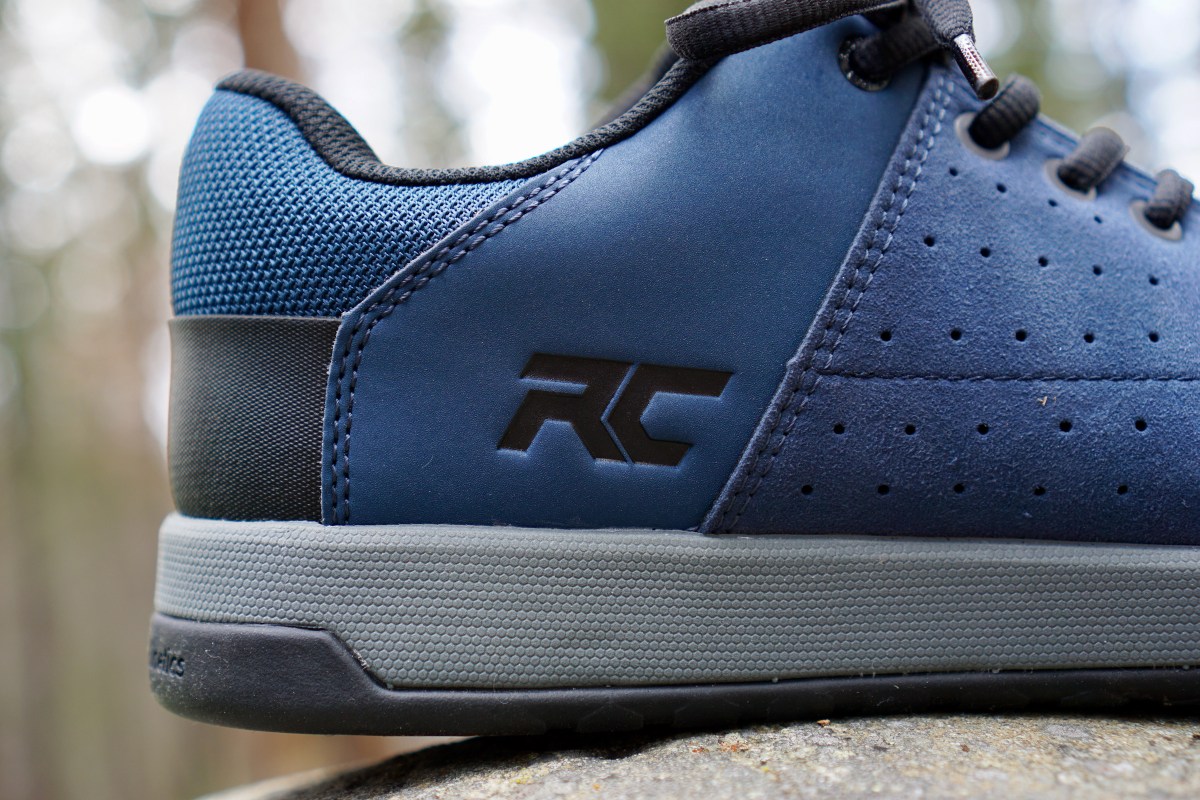
The world of mountain bike shoes is filled with dozens of companies all vying for market share. Some of the more popular brands, like Shimano, Five Ten, Giro, Sidi, and Pearl Izumi, have gained recognition for their high-quality products and innovative designs over the years. Others, like Five Ten and Ride Concepts are better known for their downhill and enduro focused models (like the venerable Five Ten Freerider Pro flat pedal shoe). Whereas some, like Sidi and Shimano, have traditionally been more focused on cross-country and trail-oriented models. No matter your preference of shoe type and riding style, opting for a popular brand ensures you’re getting a quality product backed by years of experience.
Where to Buy Mountain Bike Shoes
If you can’t find your favorite pair of mountain bike shoes at your local bike shop–which is something we wholeheartedly support–then there are a number of reputable online retailers to choose from. Some of our favorite bike-specific websites include Competitive Cyclist and Jenson USA. Other popular non-cycling specific options are REI and Backcountry. Additionally, some brands like Five Ten, Specialized, Ride Concepts, and Pearl Izumi operate their own official websites where you can buy direct. Regardless of where you make your purchase, ensure the retailer offers reliable shipping and return options (free returns is even better!), giving you the flexibility to exchange or return items if needed.
Frequently Asked Questions
The best types of shoes for mountain biking are mountain bike specific clipless and flat pedal shoes. Clipless shoes use a cleat system that attaches to the pedal, providing excellent power transfer and control. Whereas flat pedal shoes have a sticky rubber sole for maximum grip and are favored by riders who prefer more freedom and easy foot placement.
Yes, clip-in shoes are highly recommended for mountain biking. They offer several advantages, including efficient power transfer, improved pedaling technique, and enhanced control over rough terrain. The secure connection between the shoe and pedal provides stability, especially during technical climbs and descents.
Absolutely! Better-quality mountain bike shoes can make a significant difference in your riding experience. They offer advanced features like superior fit, enhanced durability, improved ventilation, and optimized sole stiffness. These factors contribute to increased comfort, performance, and overall enjoyment on the trails.
Yes, professional mountain bikers commonly use clipless pedals and shoes. Clipless systems provide several advantages for competitive riding, including enhanced power transfer, efficient pedaling, and a secure connection between the shoe and pedal. The ability to generate more power and maintain control over rough terrain makes clipless pedals a preferred choice for many professional riders.
Quality mountain bike shoes can range in price from $85 to over $300 depending on features and brand. Expect to invest more for advanced technologies, materials, and durability. However, there are also affordable options available that provide good performance and value.
When choosing mountain bike shoes, consider factors such as closure systems, sole stiffness, outsole traction, and protection levels. These features play a crucial role in enhancing your performance and comfort on the trails.
