Author: Erik Nilson / Last Updated: January 18, 2025
Written by bike industry experts with over 20 years of bike-hauling experience, our bike rack buying guide covers everything you need to know before making a purchase. Read on to learn how to choose the best bike rack for your car, SUV, or pickup truck.
Jump to…
- What Are the Different Types of Bike Racks?
- Bike Capacity
- How Much Do Bike Racks Weigh?
- Bike Compatibility
- Key Features of Bike Racks
- Popular Bike Rack Accessories
- Bike Racks and Vehicle Access
- Best Bike Rack Brands
- Materials, Build Quality, and Durability
- Bike Rack Maintenance and Care
- Bike Rack Warranty
- Bike Rack Fit Guides
- Bike Rack Storage
Ready to make a purchase? See our expert guide to the year’s best bike racks.
When you buy through our links, we may earn a commission (at zero cost to you). Learn more.
What Are the Different Types of Bike Racks?
From roof-top carriers to trunk- and hitch-mounted options, bike racks come in all shapes and sizes. Below we break down the most popular ways to transport bikes, providing the pros and cons of each style.
Hitch Mount Bike Racks
Best For: SUVs and Pickup Trucks
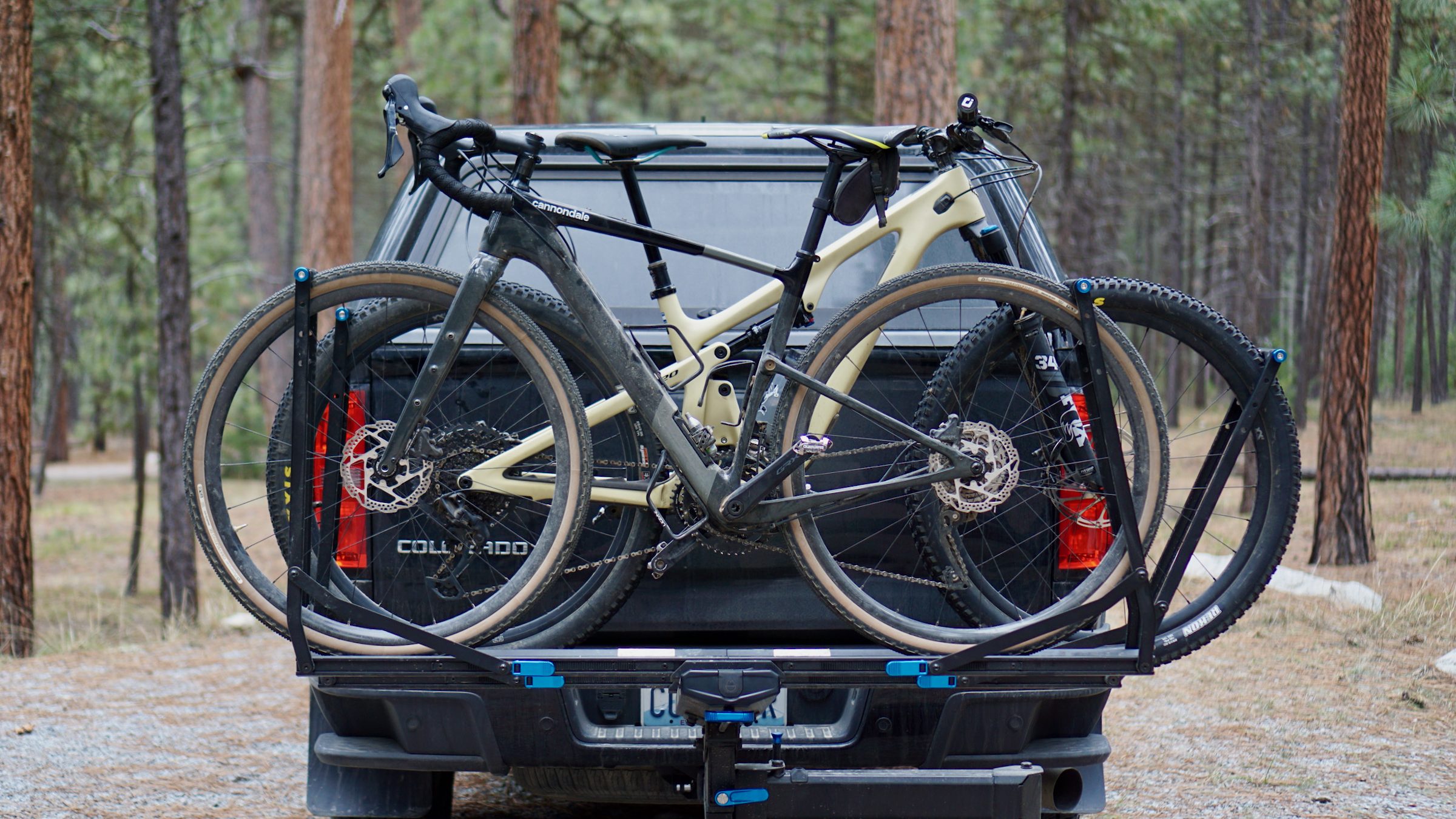
As the name suggests, hitch-mounted bike racks like the Thule T2 Pro XTR attach to the back of your vehicle using the hitch. They provide one of the most secure ways to carry your bike and are low to the ground, making them easy to load–which is an especially important consideration for heavy e-bikes.
Pros:
– The most secure style of bike rack.
– Very quick and easy to load.
– Low height and high load capacity make them a perfect match for e-bikes.
Cons:
– Heavy.
– Expensive.
– Big and bulky to store.

Platform Hitch Bike Racks
Platform-style hitch racks are very secure and are one of the easiest to load and unload out of all rack types. And since bikes are usually secured by an arm pressing down on the tire, there is little bike frame-to-rack interference–making them ideal for everything from small kids bikes to carbon fiber gravel bikes.
Platform-style hitch racks also have some of the highest weight capacities and are one of the few styles rated to carry e-bikes (which can weigh in excess of 60 pounds each). However, the two biggest downsides to platform-style hitch racks are their price (it’s easy to spend over $600) and their heft (most models weigh over 50 pounds). All things considered, a platform rack like the Thule T2 Pro XTR is our preferred method of carrying bikes.

Hanging Hitch Bike Racks
Another popular hitch mount style is the hanging rack, which has two arms that extend horizontally and provides a place for a bike’s frame to rest on. Straps then run over the top of the bike and secure it to the rack. Compared to platform models, hanging racks are a relatively compact and lightweight alternative for hauling lots of bikes. For example, Thule’s Apex XT 5 weighs in at a light 35 pounds, can carry four bikes, and folds up nice and small for storage purposes.
Despite these advantages, however, hanging racks do pose a few problems. They typically have a lower max capacity of around 35 pounds per bike–which rules out e-bikes–and the horizontal arms don’t play nicely with curvy frame designs or small kids bikes. Finally, these styles can scuff frames over time and the bikes sway more when traveling on rough roads.
Vertical Hitch Bike Racks
If you’re looking for the best rack for shuttle laps, dirt roads, and lots of bikes, then the vertical style bike rack should be first on your list. These racks hang the bike vertically by the wheel, fork, or handlebars and are positioned side by side behind the vehicle. The main advantages of this style include their ability to carry a ton of bikes (up to seven) and not take up much room while doing it–this makes traveling over washed-out roads much less problematic. That being said, vertical racks are extremely heavy and very expensive, and they take up a ton of room when not in use. Case in point, the 1UP USA Recon 6 weighs 102 pounds and costs a cool $1,400.
Swing-Away Hitch Bike Racks
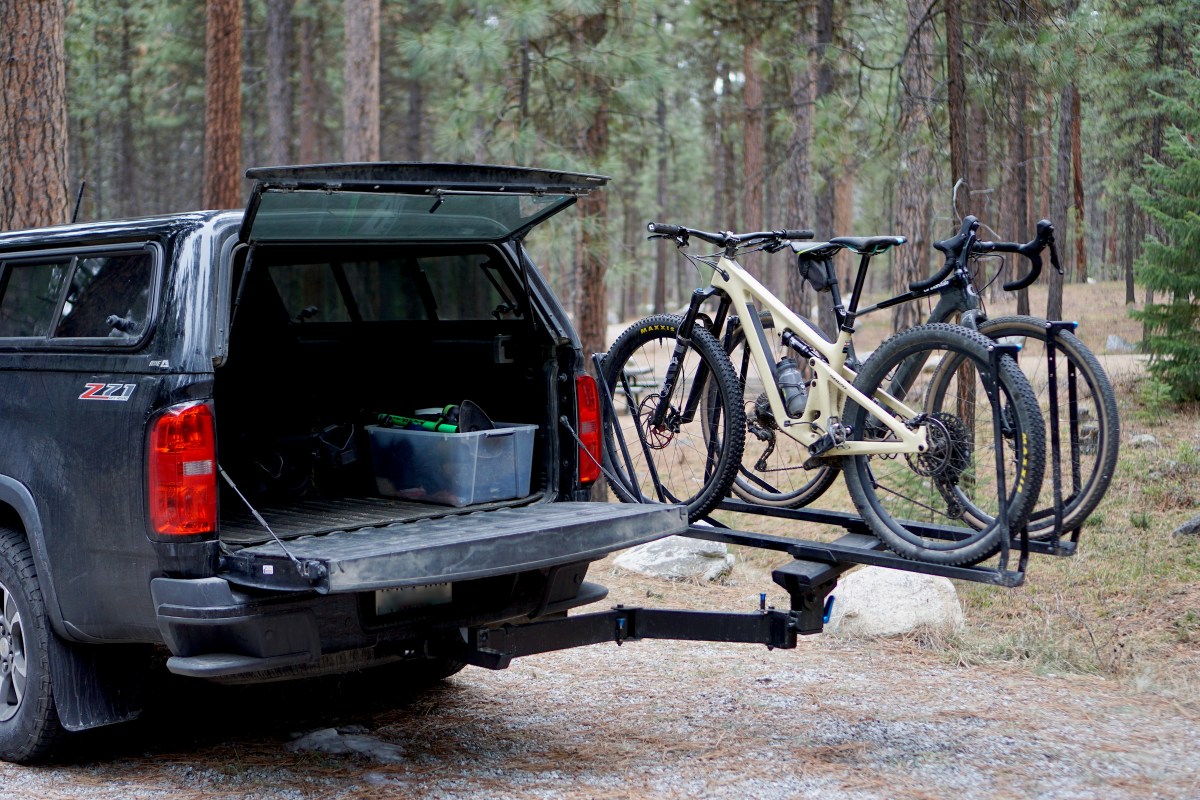
For ease of accessing the rear of your van, SUV, or crossover, it doesn’t get much better than with a swing-away style bike rack. Unlike other racks that tilt down, these models swing away completely from the vehicle, providing best-in-class access without unloading bikes. Models like the RockyMount AfterParty combine swing-away functionality with a platform-style hitch rack, making it one of our favorites at the moment. Of course, swing-away models weigh significantly more due to the extra functionality, and typically have an added cost as well. It’s also important to note that most are not compatible with 2-bike extenders.
See our In-depth Review of the RockyMounts AfterParty for more info.
Trunk Mount Bike Rack
Best For: Hatchbacks and Cars
Trunk-mount racks are one of the most effective ways to transport bikes on hatchbacks and small cars. They’re relatively inexpensive, don’t require any modifications, and they take up little space when not in use. Trunk-mount models work well with bikes that have simple frame designs–like hardtail mountain bikes and road bikes–and are relatively simple to load. As with most bike rack styles, it’s all a give and take. Trunk racks don’t hold bikes as securely as platform styles, and the carrying arms can scuff and scrape the frame. Nevertheless, models like the Saris Bones 2 work great for cyclists who may only need to haul their bikes a handful of times a year or those who are limited on storage space.
Pros:
– Relatively lightweight and inexpensive.
– Easy to store when not in use.
– Some models can carry up to five bikes.
Cons:
– Often scuffs bike frames.
– Don’t work well with kids bikes or full-suspension mountain bikes.
Roof Top Bike Rack
Best For: Hatchbacks, Crossovers, and Small Cars
Roof top bike racks have a lot going for them: they take up minimal space whether on your car or stored in the garage, they’re relatively inexpensive (if you already have a roof-top rack system), and they don’t block access to your trunk or rear hatch like hitch-mounted options. Roof-top carriers can be broken down into two different categories, fork-mounted models like Kuat’s Trio which requires removing the front wheel to mount the bike, and wheel-on models like the Yakima HighRoad where the rack clamps down on the front wheel.
Fork-mounted options are slightly easier to load–with the front wheel removed you don’t have to lift the bike as high–and wobble a little less. However, cramming a muddy front wheel inside your car can be a messy and inconvenient experience. With wheel-on models, you don’t have to constantly disassemble and reassemble your bike, which certainly makes them the more convenient and quicker option. That said, wheel-on models can be challenging to load, especially for shorter riders. Even lifting a light road bike onto a relatively small vehicle–like a Subaru Impreza–can be pretty tricky. Regardless of the style of roof-mounted bike rack, don’t forget to remove bikes before pulling in the garage! We’ve known more than a few riders who have crunched bikes over the years.
Pros:
– Don’t block access to the rear of your vehicle.
– Easy to store when not in use.
Cons:
– Can be challenging to load on tall vehicles.
– Expensive if you don’t already have a base roof rack system.

Tailgate Bike Pads
Best For: Pickup Trucks
Tailgate bike pads are one of the most convenient and least expensive ways to haul a ton of bikes (up to six or more). A tailgate bike pad, as the name suggests, rests over the tailgate of a pickup truck and provides a place to rest the frame of your bike, while the front wheel hangs out the back. Quality models, like the Fox Mission, feature raised bumpers and tie downs to keep bikes from moving around, a soft inner liner to protect your pickup’s paint, and high-density foam padding to keep everything free of dents. For around $200, the bike capacity-to-cost ratio is very favorable.
That being said, tailgate bike pads fall short in two areas. One, if bikes are not properly secured and spaced, they rub against each other and create scratches. And two, we’ve never had much luck with them for road and gravel bikes (they shift around quite a lot), making them quite singular in use.
Pros:
– The least expensive ways to haul up to six bikes.
– Simple, easy, and quick to load.
Cons:
– Must own a pickup truck.
– If not properly loaded and tied down, bikes can easily be damaged.
– Don’t work well with road or gravel bikes.

Ready to buy a tailgate pad for hauling bikes? See our guide the years best tailgate bike pads.
Bike Capacity
In general, each style of rack has its own set of limitations for bike carrying capacity. Starting with the lowest: a single roof-mounted bike rack is able to carry one bike, however, it is often possible to fit one or two additional racks on your roof. Trunk racks range anywhere from one to four bikes most of the time, as do platform style hitch racks like the Thule T2 Pro XTR (with the use of an add-on).
If you’re looking for the ultimate bike capacity, hanging or vertical style hitch racks are among the best, with the Yakima RidgeBack 5 being a great example. Finally, we’ve seen pickup tailgate pads hold up to eight bikes at once, providing the highest carrying capacity out there. And should you need even more carrying capacity, consider combining roof-mounted models with a hitch-mount style.
How Much Do Bike Racks Weigh?
Overall bike rack weights are an important piece of the puzzle when it comes time to choosing one, especially if you plan to remove it with any regularity. Due to their simple design, roof-mounted models are among the lightest out there, with most models weighing under 20 pounds. Trunk-mounted racks, like the top-rated Saris Bones, are also relatively light in nature and usually weigh less than 30 pounds. Both of these styles are easy to remove and store without much issue.
However, hitch mount bike racks are where weight starts to increase significantly. There are some lightweight models available–like the Kuat Beta (14 pounds)–but expect most to be closer to 50 or 60 pounds. That said, the Thule T2 Pro XTR now features little wheels integrated into the rack, which make removal and storage a bit easier on the back.
See our In-depth Review of the Thule T2 Pro XTR for more info.

Bike Compatibility
Bike Frame
With so many different frame shapes, it’s important to understand that some bike frames pose compatibility issues for certain styles of racks. The one standout offender is the hanging style hitch-mounted model, like the Saris Bones or Yakima RidgeBack. These racks don’t work well with full-suspension mountain bikes, small kids bikes, or bikes with curvy frame shapes. Put plainly, the two horizontal arms have a hard time fitting and supporting these types of bikes. Of course, you can buy an adapter, but it’s simply a band-aid for a much larger issue. Having said that, adult-sized road, gravel, and hardtail frame designs work well with hanging style racks.

Wheel Size and Tire Width
Mostly a consideration for fatbikers and those who ride on plus-sized mountain bike tires, it’s important to know that not all platform and roof-top racks will work with your bike out of the box. Oftentimes, a larger strap or additional hardware is needed to fit these bikes. For example, Yakima’s StageTwo rack will happily accommodate oversized tires, but it needs a longer strap to fit around the rear tire. Also, 1UP USA’s Heavy Duty double requires wider spaces for bike tires greater than 3.1 inches. Some models, however, will work with pretty much all wheel sizes and tire widths (like the highly versatile Thule T2 Pro XTR).

Bike Rack Weight Capacity
A sometimes overlooked detail when choosing a bike carrier is a rack’s max load capacity. It’s wise to consider this, especially with the rise in popularity of heavy e-bikes. It’s safe to assume that most non-e-bikes (sometimes referred to as acoustic bikes) weigh around 35 pounds or less, and should work with any number of racks. For e-bikes, however, it’s not uncommon that they weigh 55 pounds or more. And for these riders, we recommend an e-bike-specific carrier like the Yakima StageTwo, which has a max load capacity of 70 pounds per bike. So, make sure to check the manufacturer’s website for this technical spec before making a purchase.
Key Features of Bike Racks
Tilt Lever
Typically located at the very rear of a hitch-mounted carrier and engaged with a lever or handle, a tilt mechanism allows a user to swing a bike rack down to gain access to the back of a vehicle. Without this feature, it would be all but impossible to lower a pickup tailgate or open the rear of an SUV, van, or hatchback with the rack mounted. Many premium models–like the Thule T2 Pro XTR–are also easy to operate with bikes loaded, which is especially convenient. Thankfully, tilt features are found on all but the cheapest hitch racks.

Integrated Bike Locks
Bike rack locks offer great peace of mind when running into the store for a quick post-ride snack and are a great way to deter thieves from quickly nabbing your bike. Fortunately, most bike racks have simple attachment points for cable locks, and you’ll find them included with more premium options. However, aftermarket options aren’t inexpensive and it’s smart to include their price into your overall budget. While bike locks aren’t a guaranteed way to keep your bike from getting stolen, they’re a worthwhile investment that we recommend purchasing.

Anti-Wobble Knobs
Maybe it’s just us, but there are few things more aggravating then seeing bikes swaying around behind a vehicle when cruising down the road. Mainly because any extra motion can cause more wear and tear on our beloved bicycles. For this reason, we always recommend looking for hitch racks with some type of anti-sway component built into the hitch attachment.
Our two favorite racks at the moment–the Yakima StageTwo and Thule T2 Pro XTR–both have a knob which expands a wedge inside the receiver hitch. This effectively eliminated all swaying and side-to-side movement, which in turn saves our bikes from scratches and unnecessary wear. That said, if you’re eyeing a model without an anti-sway feature, there are plenty of quality aftermarket hitch stabilizers that work quite well.

Popular Bike Rack Accessories
Loading Ramp
Spurred by the rise in popularity of e-bikes, ramps are an essential feature for loading and unloading heavy bikes on hitch-mounted racks. Instead of a two-person job, or a struggle for one, ramps allow a rider to simply wheel their bike up and onto the rack platform. While these aren’t super common at the moment, they can be found on the Yakima StageTwo (ramp sold separately) and the Thule EasyFold XT 2 (ramp included). Sure, you could use a piece of two-by-four wood for the job, but it’s definitely not as painless as the purpose-built options.

Rear Lights
If you spend a lot of time transporting your bike at night–or perhaps you just like the added peace of mind–look for bike racks with built-in lights or reflectors. Unfortunately, these options are pretty limited at the moment, and Yakima is one of the few to offer an aftermarket lighting kit for their StageTwo rack. That being said, aftermarket rack lighting kits are relatively inexpensive and can easily be added to just about any hitch rack, and they simply plug into your vehicle’s trailer wiring harness. It’s worth noting that most rear-facing racks (like trunk and hitch options) can obscure taillights when they are loaded with bikes, so it makes a lot of sense. Having almost been rear ended multiple times over the years, we think it’s a worthy investment.
Bike Racks and Vehicle Access
Accessing the rear of your vehicle is an important consideration when selecting a rack, especially if you’re in the market for a hitch- or trunk-rack model, as these are the styles that cause the most interference. Luckily, most hitch-mounted racks feature a tilt or swing feature that allows access to the back of your SUV or van. Our current favorite, the RockyMounts AfterParty, has a built-in swing feature. However, even with this capability, these styles of racks can still make it more challenging to load groceries or other objects into the rear of the vehicle. Only the cheapest models of hitch racks don’t come with this capability, and we think it’s best to avoid them altogether–you’ll thank us later.

Although trunk racks don’t physically inhibit access to the rear of your vehicle, they can cause other problems when you need to get in the back. Because of how these racks are mounted, the rear hatch or trunk of your vehicle is supporting the weight of the rack 100%. This makes lifting the trunk of your vehicle slightly harder (because you’re now lifting the weight of the rack as well) and can also cause unwanted wear and tear on your vehicle. And unlike the hitch-mounted racks above, where many models can swing or tilt with the bikes still loaded on the rack, bikes on trunk racks need to be removed before accessing the back.
Best Bike Rack Brands
When it comes to the best bike rack brands, quality bike rack options, several companies stand out. At the top, you’ll find Thule, Yakima, Kuat, and 1UP USA, who are well-known for their quality, ease of use, and wide range of rack styles and price points. Thule’s T2 Pro XTR offers a top-tier hitch-mounted design, while Yakima’s HighRoad provides a versatile roof-top option.
Kuat’s NV Base 2.0 is known for its sleek design and functionality, and 1UP USA offers robust, 100% USA-made racks like the Heavy Duty Double. These brands consistently deliver durability, user-friendly features, and strong customer support. While it can be hard to swallow the price tag for some of these models, we recommend a buy once cry once approach (we’ve put well over 20,000 miles on the Thule mentioned above without a single issue).
Materials, Build Quality, and Durability
Ranging in price from $50 to $1,400, bike racks run the gamut when it comes to build quality, materials, and durability. Inexpensive plastic models–like the $110 Saris Bones–are a nice budget option for cyclists who only need to haul their bikes on occasion. However, they can’t really hold a candle to premium options like the all aluminum 1UP USA Heavy Duty Double. Which, after tens of thousands of miles of use, has not had a single issue. Dedicated cyclists will likely take the cry-once buy-once approach and opt for a high-quality model that will last a lifetime. But for those who are just dipping their toes into the sport then a budget model like the Swagman XTC2 Tilt may be the way to go.

Bike Rack Maintenance and Care
Proper maintenance and care ensures your bike rack lives a long and happy life. It’s important to regularly inspect and tighten bolts, lube any moving parts, and give it the occasional rinse to prevent road grime from building up. Additionally, we recommend storing your rack in a cool and dry place if it will go more than a week or two without use. Performing some routine care now can prevent problems down the road, and any possible safety issues that can arise from neglect. In the end, follow the manufacturer’s instructions for how to clean and care for your bike rack.
Bike Rack Warranty
When you’re spending up to $500 or more for a quality bike rack, a solid warranty can add peace of mind to your investment. Most reputable brands, like Thule, Yakima, 1UP USA, and Kuat, offer a limited lifetime warranty. This typically covers any defects in workmanship or materials for the lifetime of the product and is only valid to the original purchaser. However, normal wear and tear, and improper use is not generally covered. No matter what brand of rack you want to purchase, it’s important to review the warranty terms, considering factors like coverage duration, specific components, and limitations.

Bike Rack Fit Guides
There’s typically never a one size fits all approach when purchasing a bike rack, as most cars are unique in their own way. Some vehicles come with hitches and roof racks installed from the factory, whereas others do not. There are also variations within factory options from vehicle to vehicle (like round vs square vs oval bars). With so many options, it’s next to impossible to remember all the different combinations and what will work for you and your vehicle. Luckily, brands like Yakima and Thule have created excellent rack fit guides to help you through the process. Their step-by-step approach is quite simple, and you’ll almost certainly be able to find the perfect rack for your vehicle. Not only do we find these guides to be very comprehensive and easy to use, but companies like REI have partnered with these brands, making for a seamless online buying experience.
Bike Rack Storage
For riders who remove their racks when not in use, finding a suitable storage solution can be challenging–especially if you have a big and heavy hitch rack. If this applies to you, we recommend looking into customized rack storage solutions that mount to a garage wall. A well-made model–like the 1UP USA Rack Stash–safely and easily mounts a hitch rack to the wall, and also has additional slots for alternative racks or accessories.
Frequently Asked Questions (FAQ)
If you have a small sedan or compact car, roof-top bike racks are the better choice over trunk-mounted models–they do a much better job of firmly holding bikes in place. However, for taller vehicles where lifting a bike overhead would be nearly impossible, trunk-mounted models are the better option.
Vertical bike racks excel at carrying a lot of bikes (up to seven in most cases) in a compact way, making them the better choice for large families or shuttle days with friends. They also don’t stick out as far as similarly loaded hitch-mounted carriers.
Trunk and hitch-mounted bike racks are by far the easiest to load and unload. You only need to lift your bike about a foot off the ground and the racks, in general, are more user friendly. Compared to roof-mounted bike racks–which require you to lift your bike overhead–hitch carriers become the easy choice.
Although hitch bike racks are quite expensive, their ease of use, high convenience factor, and overall durability absolutely make them worth it. This is especially true if you’re regularly loading and unloading your bike, as they’re the quickest and easiest style out there to use.
